Do you finish your workday feeling stiff, tight or like your shoulders have been carrying the weight of the world? Your desk habits might have something to do with it.
You start your morning feeling reasonably good.
You sit down at your desk, open your emails, grab your coffee and get stuck into work.
Before you know it, it’s lunchtime.
You’ve barely moved.
Your shoulders have slowly crept towards your ears. Your head is leaning towards your screen. Your lower back feels stiff, and when you finally stand up, you need a moment to straighten yourself.
Sound familiar?
As a chiropractor with over 20 years of experience, I regularly see office workers experiencing these very complaints.
And one of the most common things patients tell me is:
“I don’t understand why I’m so sore. I’ve literally been sitting at a desk all day!”
But here’s something worth understanding.
Your body doesn’t necessarily find sitting difficult. It’s spending hours in the same position, with very little movement or muscular variety, that can become a problem.
The good news?
You don’t need an hour at the gym or an elaborate stretching routine to start introducing healthier movement habits into your workday.
Let’s look at six exercises worth trying.
Why Office Workers Commonly Experience Neck, Shoulder and Back Pain
Think about what your body does during an average working day.
Your hands are constantly reaching towards your keyboard. Your eyes are focused on a screen. Your head may gradually drift forward, and your shoulders might become rounded.
Meanwhile, your hips remain bent, your gluteal muscles aren’t being challenged very much, and your back spends long periods in relatively similar positions.
Over time, some people begin noticing:
Neck stiffness, especially when turning their head
Tight shoulders and aching between the shoulder blades
Headaches after prolonged computer work
Lower-back stiffness when getting out of their chair
Tightness across the front of the hips
A feeling of constantly needing to stretch or crack their back
These symptoms don’t automatically mean your posture is poor or that something is structurally wrong.
But they may indicate that your body would benefit from more movement, better muscular endurance or adjustments to how you work.
And here’s what I often remind my patients: there isn’t one perfect posture you need to hold all day. Your next posture is often your best posture.
1. Chin Tucks: For the Neck That Keeps Creeping Towards the Screen
Best for: Forward-head positioning, neck stiffness and muscular fatigue from computer work.
Have you ever caught yourself leaning closer and closer towards your monitor?
Or noticed your chin poking forward while concentrating?
This is incredibly common among office workers.
The chin tuck is a simple exercise that encourages controlled neck movement and gently activates the muscles involved in supporting your head.
How to do it:
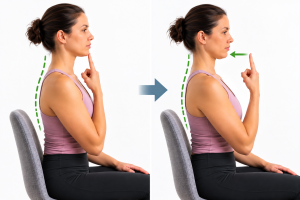
Sit upright with your shoulders relaxed.
Look straight ahead.
Gently draw your chin directly backwards, as though making a small double chin.
Keep your eyes level. Avoid looking down or tipping your head backwards.
Hold for 3–5 seconds.
Repeat 8–10 times.
Chiropractic tip: Think about sliding your head backwards rather than forcing your chin towards your chest.
This should feel gentle and controlled, not painful.
If you spend much of your day looking at a screen, try a few repetitions during your regular movement breaks.
2. Doorway Chest Stretch: For Rounded Shoulders and Tightness Across the Chest
Best for: Tight chest muscles, rounded-shoulder positioning and stiffness after prolonged typing.
Here’s a question.
When you finish working, do you ever feel like your shoulders naturally want to roll forwards?
Many office workers spend hours with their arms positioned in front of their bodies.
A gentle chest stretch can be a useful way to introduce movement in the opposite direction.
How to do it
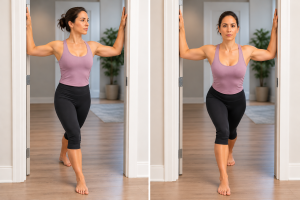
Stand in an open doorway.
Place your forearms against the doorframe, with your elbows slightly below shoulder height.
Step one foot forwards.
Gently shift your body forwards until you feel a comfortable stretch across your chest.
Hold for 20–30 seconds.
Repeat twice.
Chiropractic tip: Don’t arch your lower back to make the stretch feel bigger. Keep your ribs relaxed and allow the movement to come from the shoulders and chest.
Remember, rounded shoulders aren’t automatically harmful. The aim is to maintain comfortable mobility, not force yourself into a rigid upright position.
3. Seated Thoracic Rotation With Breathing: The Overlooked Exercise I Love for Desk Workers
Best for: Upper-back stiffness, restricted trunk rotation and that uncomfortable feeling between the shoulder blades.
This is one of my favourite movements to introduce to people who spend long hours sitting.
Why?
Because so many office workers focus on stretching their neck when some of the stiffness they’re experiencing may also involve their upper back.
Your thoracic spine is the middle section of your back, where your ribs attach.
It’s designed to move, including rotating when you turn your body.
But when you’re sitting at a computer, you might barely rotate through this area for hours.
This exercise combines gentle upper-back rotation with slow breathing.
How to do it
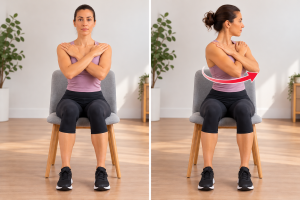
Sit sideways on a stable chair with your feet flat on the floor.
Place a small cushion between your knees if comfortable, keeping your pelvis facing forwards.
Cross your arms gently over your chest.
Slowly rotate your upper body towards one side, keeping your hips relatively still.
Take a slow, comfortable breath in.
As you breathe out, relax into the position without forcing the rotation.
Return to the centre and repeat on the other side.
Perform 5 slow repetitions each way.
Chiropractic tip: Keep the movement comfortable. You should feel your upper back rotating, rather than twisting forcefully through your lower back.
The breathing component encourages a slower, more controlled movement and allows the rib cage to move naturally.
It’s a useful exercise for people who feel they need to constantly twist or stretch their upper back after sitting.
Why I particularly like this exercise: It encourages movement through an area that often gets overlooked in conventional desk-stretch routines.
It’s not a miracle exercise, and research hasn’t established that this exact variation is superior to other thoracic mobility exercises. But it’s a practical, equipment-free way to combine upper-back movement with relaxed breathing.
4. Resistance Band Rows: Because Stretching Alone Isn't Enough
Best for: Building shoulder-blade muscle strength and endurance for prolonged desk work.
Here’s something that surprises many patients.
Sometimes the answer isn’t another stretch.
Sometimes your muscles need to become stronger.
When you sit at a desk for hours, your neck and shoulder muscles are working to support your head and arms.
For people experiencing recurring neck and shoulder discomfort, targeted strengthening can be an important part of management.
In fact, research involving office workers with neck pain suggests that neck, shoulder and shoulder-blade strengthening exercises can help reduce pain and disability, although the certainty of the evidence varies.
One simple exercise I recommend considering is the resistance band row.
How to do it
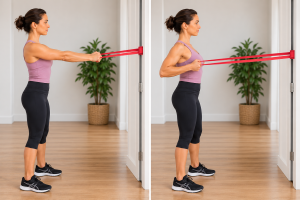
Secure a resistance band to a stable anchor around chest height.
Stand upright and hold one end in each hand.
Begin with your arms extended comfortably in front of you.
Pull your elbows backwards, close to your body.
Allow your shoulder blades to move naturally towards one another.
Slowly return to the starting position.
Perform 2 sets of 10–15 repetitions.
Choose a resistance that feels moderately challenging without causing pain.
Chiropractic tip: Avoid shrugging your shoulders towards your ears as you pull. Keep your neck relaxed and focus on controlled movement.
This is one of the exercises worth doing consistently several times a week, rather than relying on occasional stretching when your shoulders become sore.
5. Standing Hip Flexor Stretch: For the Lower Back That Feels Stiff When You Stand Up
Best for: Tightness across the front of the hips after prolonged sitting.
Have you ever stood up after a long meeting and felt like you needed a few seconds before you could walk comfortably?
Or noticed that your lower back feels particularly stiff after a day behind the computer?
When we sit, our hips remain in a flexed position for extended periods.
This doesn’t necessarily mean the hip flexor muscles have permanently shortened, but some people develop a sensation of tightness or reduced comfort when extending their hips.
A gentle standing hip flexor stretch can help introduce movement in that direction.
How to do it
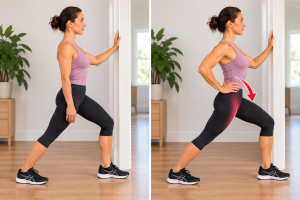
Stand in a staggered stance, with one foot forwards and the other behind you.
Hold a desk or chair for balance if needed.
Slightly bend both knees.
Gently tuck your pelvis underneath you.
Shift your body forwards slightly until you feel a stretch at the front of the rear hip.
Hold for 20–30 seconds.
Repeat twice on each side.
Chiropractic tip: The key is the gentle pelvic tuck. Don’t exaggerate the movement by arching your lower back.
If you find yourself stretching your lower back constantly, it’s worth considering whether your hips, muscular strength and overall movement habits also need attention.
6. Sit-to-Stand Squats: The Simple Exercise Your Desk Routine May Be Missing
Best for: Lower-body strength, movement confidence and breaking up prolonged sitting.
This exercise might seem almost too simple.
But think about it.
How often do you get out of your chair during a typical workday?
Some people remain seated for hours, getting up only for lunch or a bathroom break.
Sit-to-stand exercises challenge the muscles of your thighs and hips and help you practise a movement you perform every day.
How to do it
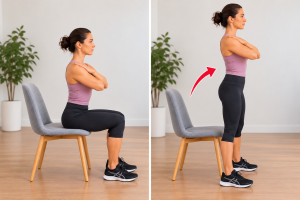
Sit on a stable chair with your feet about hip-width apart.
Position your feet comfortably underneath or slightly behind your knees.
Lean your torso forwards slightly.
Push through your feet and stand up.
Slowly lower yourself back into the chair.
Repeat 10–15 times.
For an added challenge, hover just above the chair before sitting down.
Chiropractic tip: Aim for smooth, controlled movement rather than speed. Keep your knees tracking comfortably in line with your feet.
This is also a great opportunity to remind yourself that your body was designed for more than sitting.
Your 5-Minute Office Posture Reset
Don’t feel like you need to perform all six exercises every hour.
Instead, start with a manageable routine.
During a short work break:
8 gentle chin tucks
5 seated thoracic rotations on each side
20 seconds of chest stretching
20 seconds of hip flexor stretching on each side
10 sit-to-stand repetitions
Depending on your pace, this should take approximately five minutes.
Then, two or three times a week, include resistance band rows as part of a more structured strengthening routine.
You can also make small changes throughout the day: walk while taking a phone call, stand up between meetings, take a short lunchtime walk or simply change your sitting position.
The goal isn’t to constantly correct your posture.
It’s to give your body more opportunities to move.
Why Does My Neck or Back Still Hurt Even Though I Stretch?
This is a question I hear regularly in practice.
A patient might tell me:
“I stretch every day, but by the afternoon my neck is tight again.”
Or:
“I get up and walk around, but as soon as I sit back down, my lower back starts aching.”
And this is where we need to look beyond stretching alone.
Your symptoms may involve several contributing factors, including muscular endurance, workload, stress, sleep, exercise habits, joint mobility or the setup of your workstation.
For example, if your monitor is positioned awkwardly, your chair doesn’t support comfortable working, or you’re constantly reaching for your mouse, these factors may contribute to discomfort.
Similarly, if your neck and shoulder muscles lack the endurance required for prolonged work, stretching alone may not address everything contributing to your symptoms.
This is why a thorough assessment can be helpful when discomfort keeps returning.
Rather than assuming everyone needs the same stretch, we look at how you’re moving, where you’re experiencing symptoms and what may be contributing to them.
Frequently Asked Questions About Office Posture
What is the best exercise for poor posture at a desk?
There isn’t one exercise that suits everyone. Chin tucks, thoracic rotations, shoulder strengthening and regular movement breaks can all be useful depending on your symptoms and physical needs.
How often should office workers stretch?
Try introducing short movement breaks regularly throughout your working day. A practical starting point is changing position or moving every 30–60 minutes where possible. This is a habit-building suggestion, not a medically established ideal interval.
Can sitting all day cause neck and shoulder pain?
Prolonged sitting and computer work can contribute to neck and shoulder discomfort in some people, particularly when combined with repetitive tasks, limited movement and other physical or psychosocial factors.
Is strengthening better than stretching for office workers?
Both have a role, but research suggests targeted strengthening exercises may be particularly helpful for office workers already experiencing neck pain. Stretching can help with comfort and mobility, while strengthening develops muscular capacity and endurance.
Can chiropractic care help with office-related neck and back discomfort?
Chiropractors assess musculoskeletal concerns, including neck and back discomfort. Depending on your assessment, management may involve advice, appropriate manual therapy, exercise recommendations or referral to another healthcare professional. Not every office worker with discomfort needs chiropractic treatment.
A Final Thought: Your Body Needs Movement, Not Perfect Posture
If there’s one thing I’d love you to take away from this article, it’s this:
You don’t need to sit perfectly. You need to move regularly and build a body that’s comfortable with the demands you place on it.
Your shoulders don’t need to be pinned backwards all day.
Your spine doesn’t need to be held rigidly upright.
And you don’t need to spend every spare minute stretching.
Instead, aim for a healthy balance of movement, strength, flexibility and recovery.
Because sometimes the smallest changes to your working day can make the biggest difference to how you feel.
And if your neck, shoulders or lower back are regularly bothering you, don’t simply assume it’s something you have to put up with because you work in an office.
It may be worth finding out what’s contributing to your discomfort.
Need Help With Neck, Shoulder or Back Pain?
Our chiropractic team works with office workers experiencing neck stiffness, shoulder tension, headaches and back discomfort.
We take the time to understand your symptoms, your daily work demands and the factors that may be contributing to your discomfort.
If your symptoms keep returning, an individual assessment can help determine what management options may be appropriate for you.
Book an appointment with our team today.
Important: These exercises are general educational suggestions and may not suit everyone. Stop if an exercise causes pain, dizziness, tingling or worsening symptoms. Seek professional assessment for persistent or worsening pain, and prompt medical attention for new weakness, significant numbness or other concerning symptoms.
Further reading
Jones et al. (2024), The influence of exercise on pain, disability and quality of life in office workers with chronic neck pain, Applied Ergonomics.
Workplace-Based Interventions for Neck Pain in Office Workers: Systematic Review and Meta-Analysis, Physical Therapy.
Effectiveness of workplace exercise interventions in the treatment of musculoskeletal disorders in office workers, BMJ Open.